
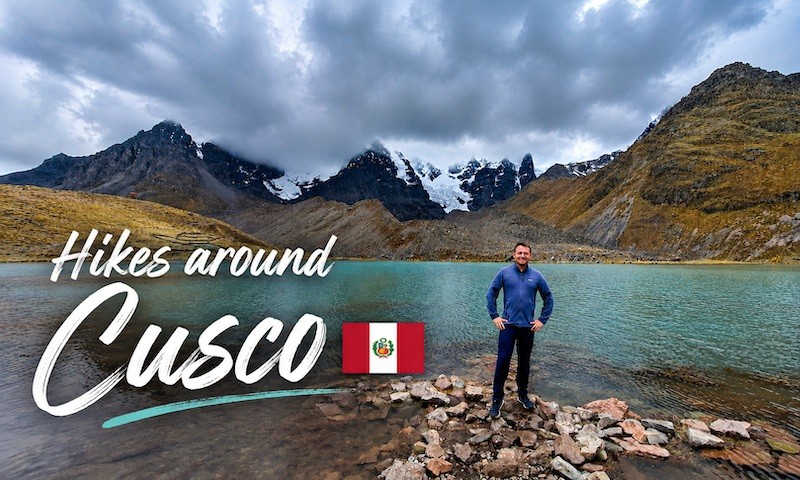
Hikes around Cusco, Peru
Cusco is probably best known as the starting point for Machu Picchu, but there is a lot more to see around the city. The Andes are right there, and there are plenty of day trips where you can hike to mountain lakes, see alpacas, visit old Inca sites, or just spend a full day driving through the Sacred Valley.
I did three trips around Cusco: Humantay Lake, 7 Lakes of Ausangate, and the Sacred Valley. The weather was great for all three trips, which definitely helped. The first two were more about hiking and mountains, while the Sacred Valley was mostly about history and sightseeing. All three can be done as day trips with organized tours, and all three start early. Very early. Pickups around 4–5 am are normal here, so be prepared for that. I was a bit worried that I could miss the tour, it was my first time buying tours on the internet, but everything is well organized.
Also it is important to mention: Cusco itself sits at about 3,400 meters, so just spending a couple of days walking around the city is already useful acclimatization before any of these trips.
Humantay Lake Hike
The first hike was Humantay Lake. This was a good choice for the first trip because the hike isn't extremely long, but you still get to experience hiking at altitude. Humantay Lake is at around 4,200 meters above sea level, so even a relatively short uphill hike can feel much harder than it normally would.
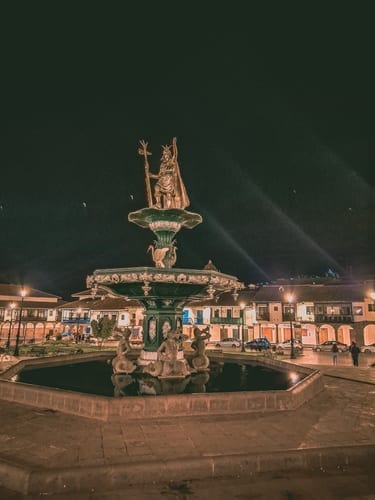
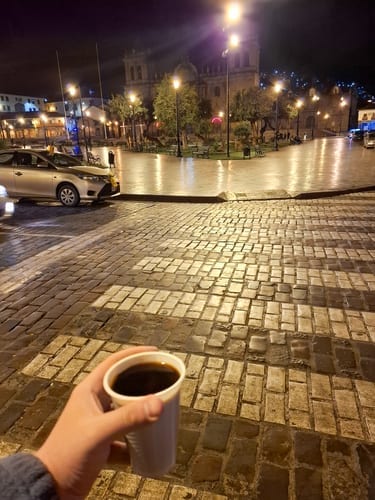
Morning coffee before the ride
The mini bus picked me up early in the morning at meeting point. The drive to the trailhead takes around three hours in total, and i slept it all, with the breakfast stop in the village of Mollepata roughly two thirds of the way. The buffet was actually great. On organized tours you never really know what the food is going to be like, but both breakfast and the later meal were better than I expected.
Starting the hike
The hike itself starts from Soraypampa, at around 3,900 meters. From there it is about 3 kilometers one way, with roughly 300 meters of climbing. On paper that doesn't sound like much. At this altitude it is enough.
At the beginning of the trail, we were offered horses. So if you start hiking and decide that altitude isn't cooperating with you, there is another option. I decided to walk. The horses only take you up, by the way. Everyone walks down.
I also paid an extra $10 for hiking poles. That was worth it. You don't absolutely need poles for this hike, but they make both the uphill and downhill sections more comfortable. If you don't have your own, I would get them.
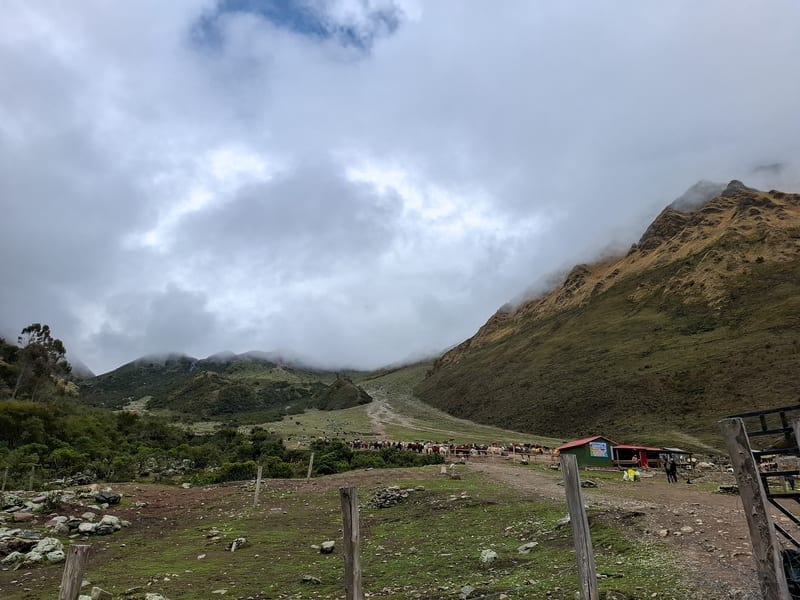
The way up
The trail climbs steadily toward the lake. This is where you start noticing the altitude. You can walk perfectly normally and then suddenly realize that you are breathing much harder than expected. The good weather made everything much easier. Most people take somewhere between one and a half and two hours to get to the top, and there is no rush, so you can go at your own pace.
Humantay Lake
Eventually I reached the lake, and the view is great. The blue water sits directly below the mountains, with steep slopes surrounding it. Above the lake is Humantay mountain itself, with its glacier at almost 6,000 meters, and on a clear day you also get views of Salkantay on the way. There is plenty of time to enjoy the view and take pictures before starting the walk back down.
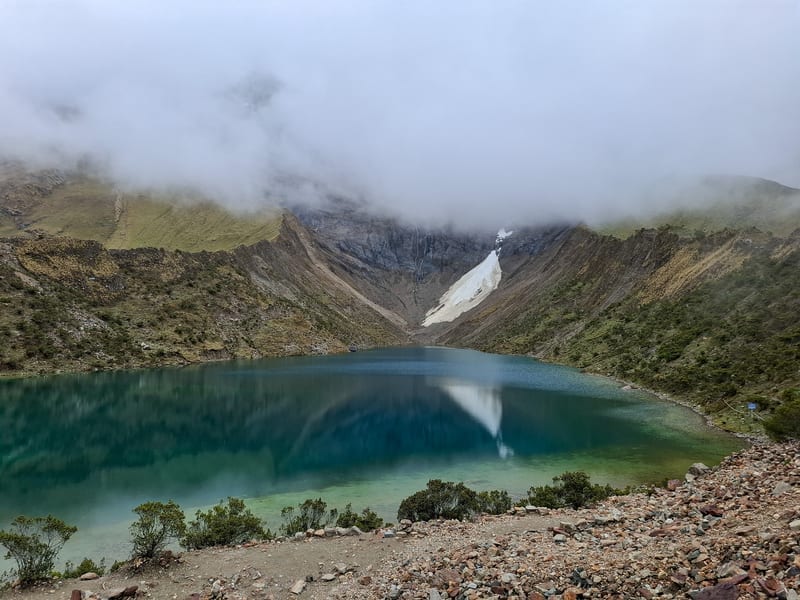
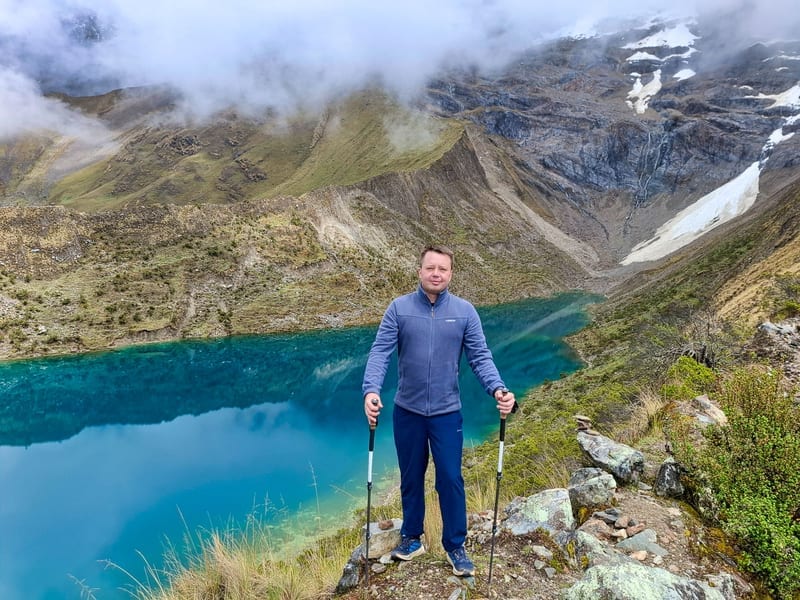
Humantay Lake
The descent is obviously easier, although this was another place where having hiking poles was useful. And at the end there was a shop with beer. Very good planning. After the hike we had the buffet and eventually drove back to Cusco.
Overall, I think Humantay Lake is a great first hiking trip around Cusco. You get some experience hiking above 4,000 meters without committing to an extremely long or difficult trek. It is also good practice before doing something higher.
Like Ausangate.
7 Lakes of Ausangate Hike
The next trip was the 7 Lakes of Ausangate. This one feels much more like being properly out in the Andes.
The logistics are similar to Humantay: an early pickup from Cusco, then around three and a half hours of driving to the small village of Pacchanta, which sits at about 4,300 meters. Breakfast is in the village, and then the hike starts directly from there.
The landscape is bigger, more remote, and the altitude is higher. The lakes are located at very high elevation, so I wouldn't recommend doing this immediately after arriving in Cusco. Good acclimatization is important here. If Humantay is the practice hike, Ausangate is the next level.
Alpacas everywhere
One of the best parts of the trip was simply the landscape on the way. There were a lot of alpacas. This is exactly the kind of scenery you imagine when thinking about the Peruvian Andes: mountains, huge open spaces, lakes and groups of alpacas walking around.
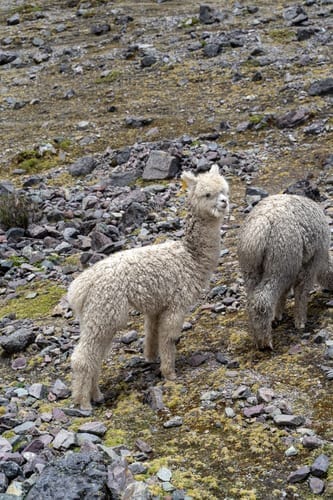
Alpaca
We also acquired another member of the hiking group. A cute puppy started following us. It stayed with us for part of the hike and seemed perfectly comfortable walking around at an altitude where humans were working considerably harder.
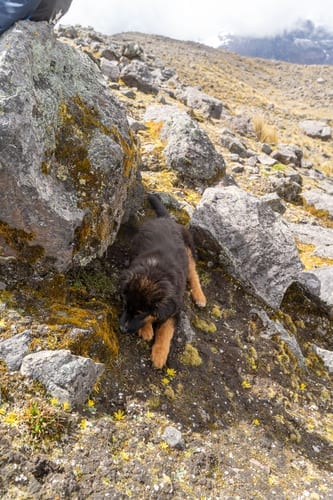
The puppy
Hiking the seven lakes
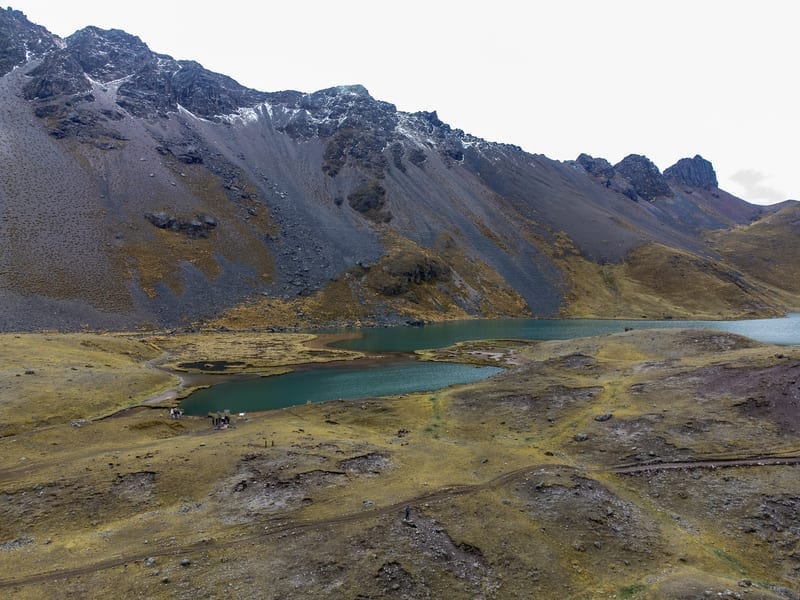
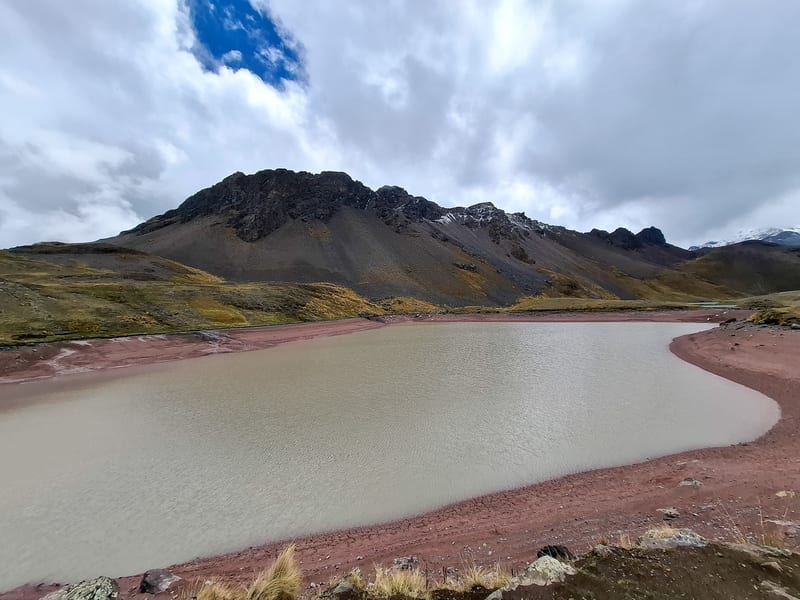
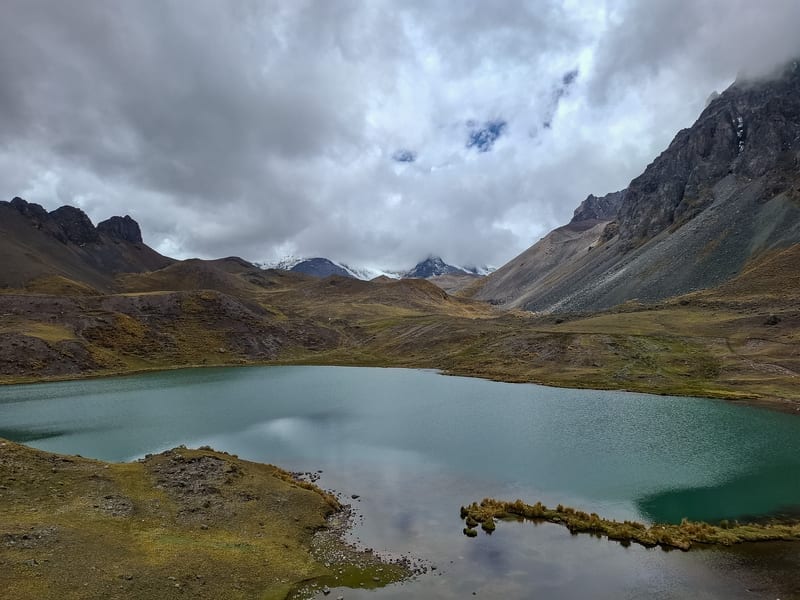
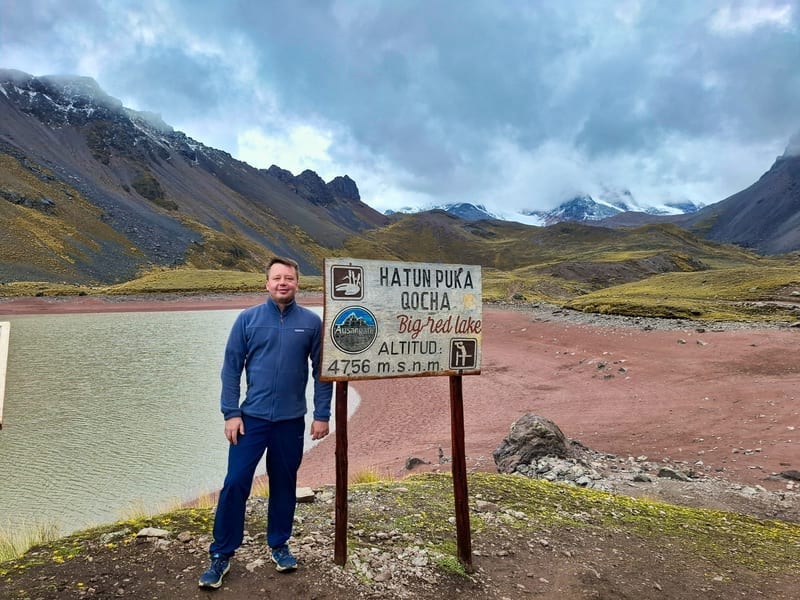
The route takes you through a series of mountain lakes beneath the Ausangate massif. Ausangate itself is the highest mountain in the Cusco region, at 6,384 meters, and the locals consider it a sacred mountain. Unlike Humantay, where there is one main destination, this hike is more about the entire route. You keep moving through the mountains and reaching different lakes along the way. The full loop is around 10–12 kilometers and takes five to six hours, with the highest point at roughly 4,600 meters. Each lake has a slightly different color, from deep blue to turquoise to green, which is why the route works so well.
The lakes
The altitude is probably the biggest challenge. Even if the trail itself doesn't look particularly difficult, everything changes when you're hiking this high. Walking uphill takes more effort and you definitely notice the thinner air. This is why I would do Humantay first and leave Ausangate until you've spent some time acclimatizing in Cusco. The views make the effort worth it.
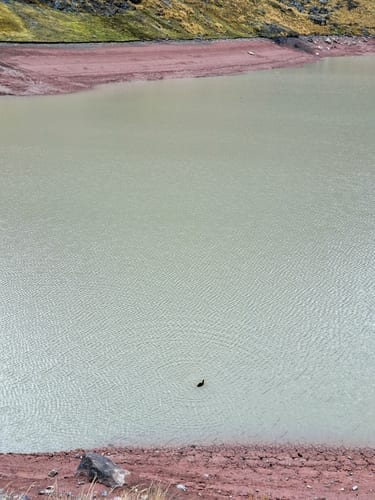
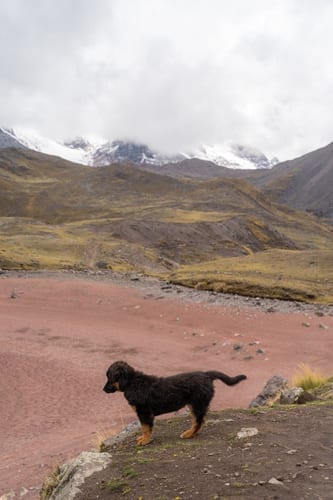
The puppy at first lake
Flying the drone at Ausangate
I also got a chance to fly my drone here. This was probably one of the best places around Cusco to do it. From the ground the landscape already looks huge, but from the air you can really see the lakes, valleys and mountains together. It gives you a completely different perspective on the area.
Something else that surprised me was the internet connection. We were high in the mountains, surrounded by alpacas and lakes, and somehow the internet was pretty good. There are places in cities where I have had worse connections.
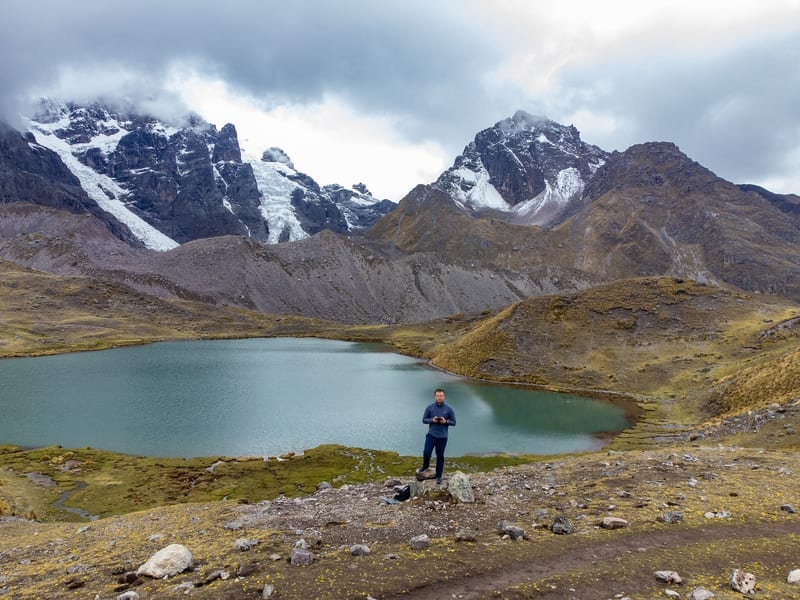
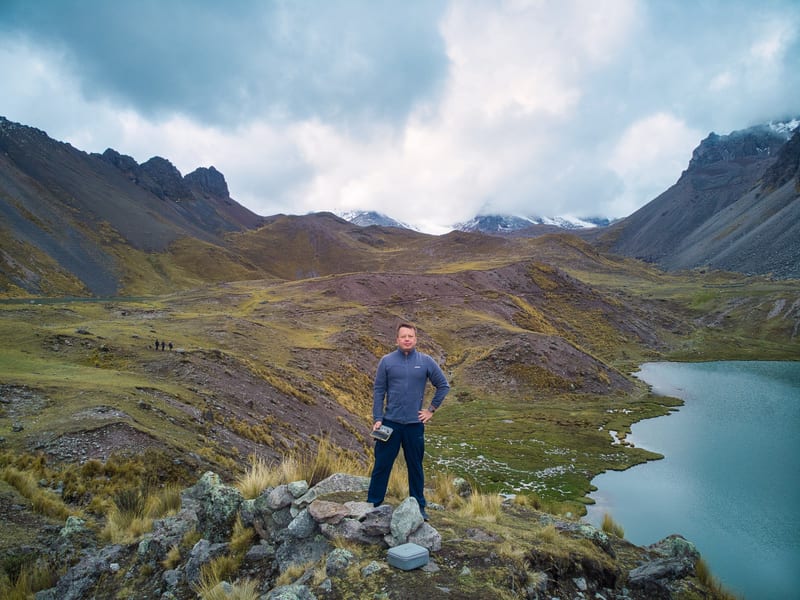
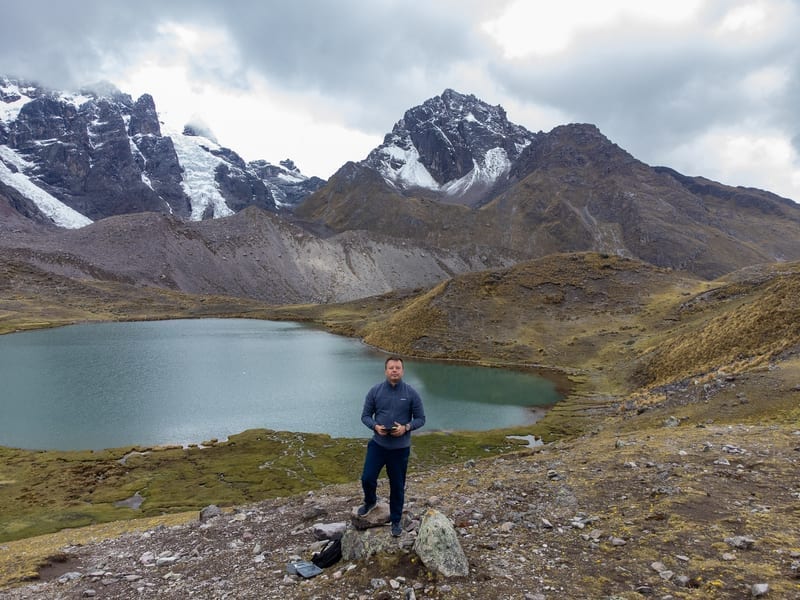
The drone selfies
Overall, the 7 Lakes of Ausangate was my more serious hiking experience around Cusco. It is higher than Humantay and requires better acclimatization, but you get beautiful mountain scenery throughout the hike rather than just at one final viewpoint. And alpacas. Lots of alpacas. And one puppy.
Sacred Valley – Pisac, Ollantaytambo, Moray and Maras
The third trip was completely different. Instead of spending most of the day hiking through the mountains, the Sacred Valley tour was mainly about Inca history and visiting archaeological sites. The valley follows the Urubamba River northwest of Cusco, and it was one of the most important agricultural areas of the Inca Empire.
There is a lot to see in one day, including Pisac, Ollantaytambo, Moray and the Maras Salt Mines. There is also a lot of driving. A lot. Fortunately, that gave me plenty of opportunities to sleep in the car between stops. So I got enough sleep.
Moray and Maras
Moray is famous for its large circular terraces cut into the ground. After seeing mountains and normal agricultural terraces all over the Cusco region, Moray looks very different. The most popular theory is that the Incas used it as a kind of agricultural laboratory, since the temperature difference between the top and bottom terraces is significant enough to test different crops.
Then there are the Maras Salt Mines, where hundreds of salt pools cover the side of the mountain. The pools are fed by a natural salty spring, and local families have been harvesting salt here since before the Incas. You can also buy the salt on the spot. Again, completely different from the hiking trips. This whole day is much more about learning about the area and its history than testing your legs at 4,000+ meters.
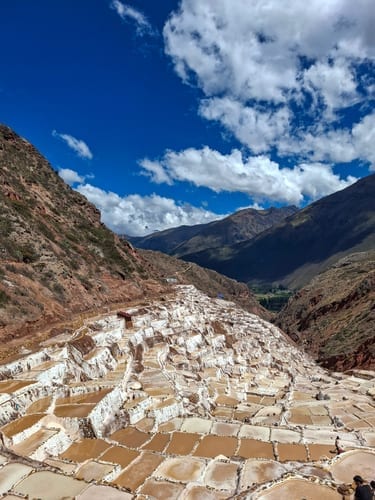
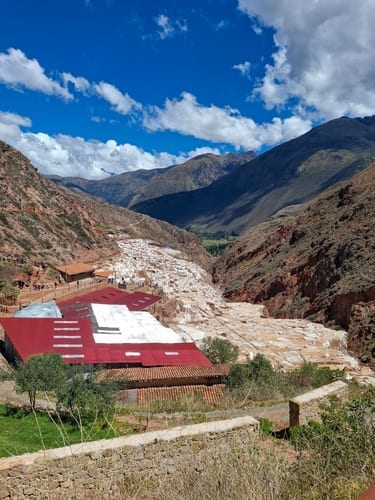
Maras Salt Mines
Ollantaytambo
Ollantaytambo is another impressive stop. The town itself is one of the oldest continuously inhabited settlements in South America, still using the original Inca street layout. There are huge terraces climbing up the mountainside and massive stone structures above the town. Once you start looking closely at the construction, you begin to appreciate just how much work went into building these places.
This is one of the reasons having a guide on the Sacred Valley trip makes sense. There is history everywhere, and without some explanation you would just be looking at rocks and terraces without understanding much of what happened there.
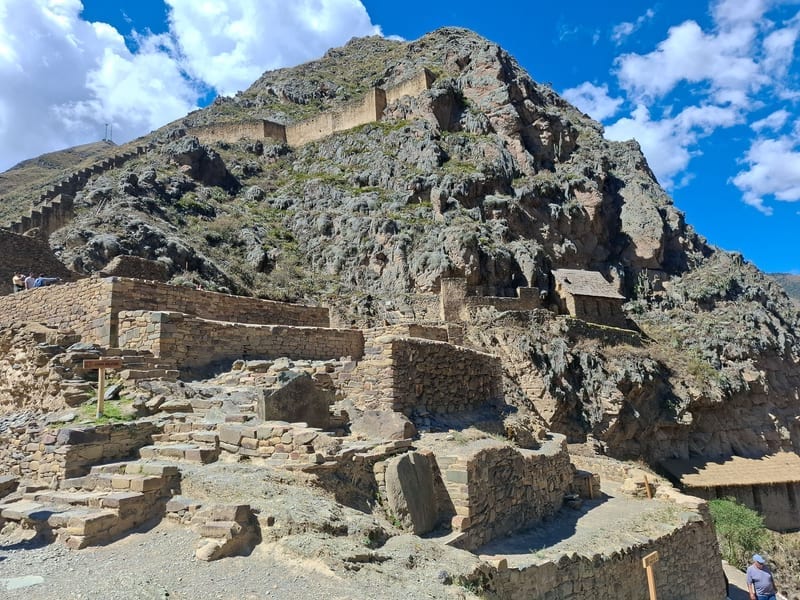
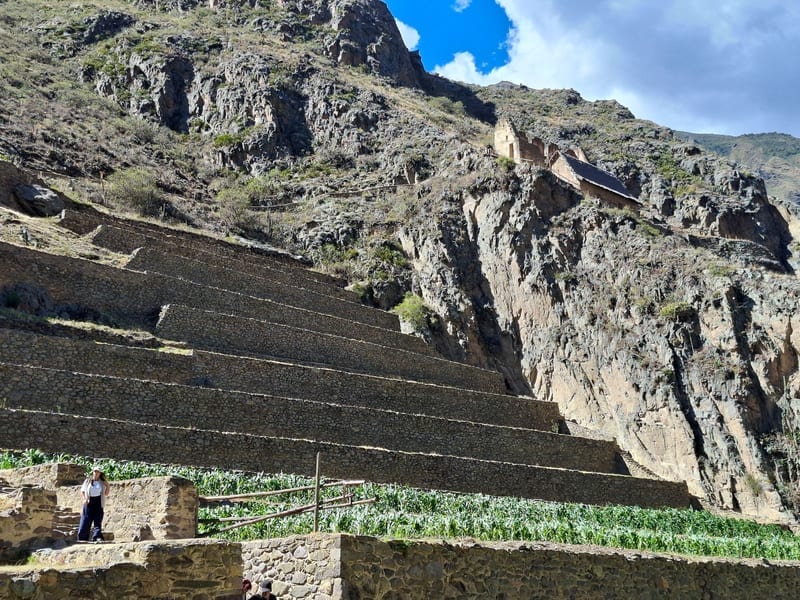
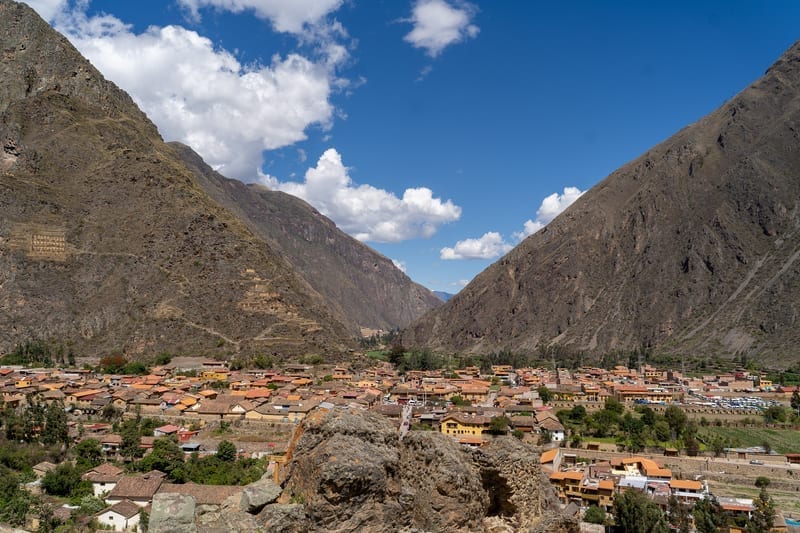
Ollantaytambo
Pisac
For me, Pisac was the biggest one. The archaeological site spreads across a large section of the mountain, with terraces and ruins overlooking the valley. There is a lot to explore, and the views across the Sacred Valley are excellent.
After two trips focused mainly on mountain scenery, it was interesting to spend a day seeing how people actually lived and built things in these mountains hundreds of years ago.
The Sacred Valley itself is beautiful as well. You spend quite a lot of time sitting in the car going from one location to another, but at least the scenery outside is good. And you can sleep.
Final thoughts
The three trips showed completely different sides of the area around Cusco.
Humantay Lake was a good first hike and had an excellent view at the end. 7 Lakes of Ausangate had the best feeling of being high in the Andes, with lakes, mountains, alpacas, drone flying and our temporary puppy companion. And the Sacred Valley was about history, Inca ruins and seeing how much there is around Cusco besides mountains and hiking. I was also lucky with the weather. Every day was great.
If you are going to Cusco, don't only use the city as a place to sleep before going to Machu Picchu. There is a lot to explore in the surrounding mountains. Just acclimatize first. Especially before Ausangate.
0 Comments